Its Navisworks plugins which extend your expirience with Selection Tree Navigation.
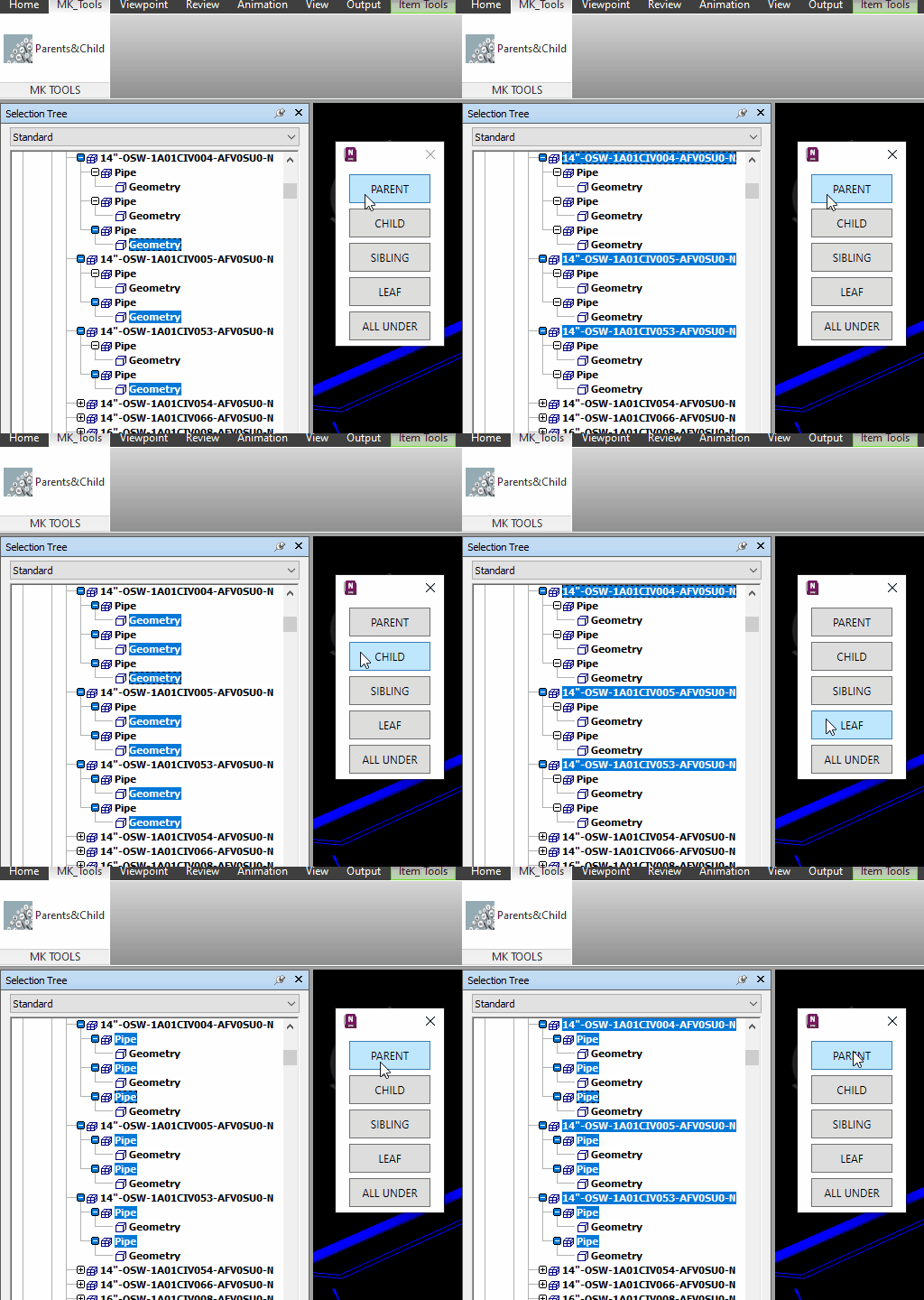
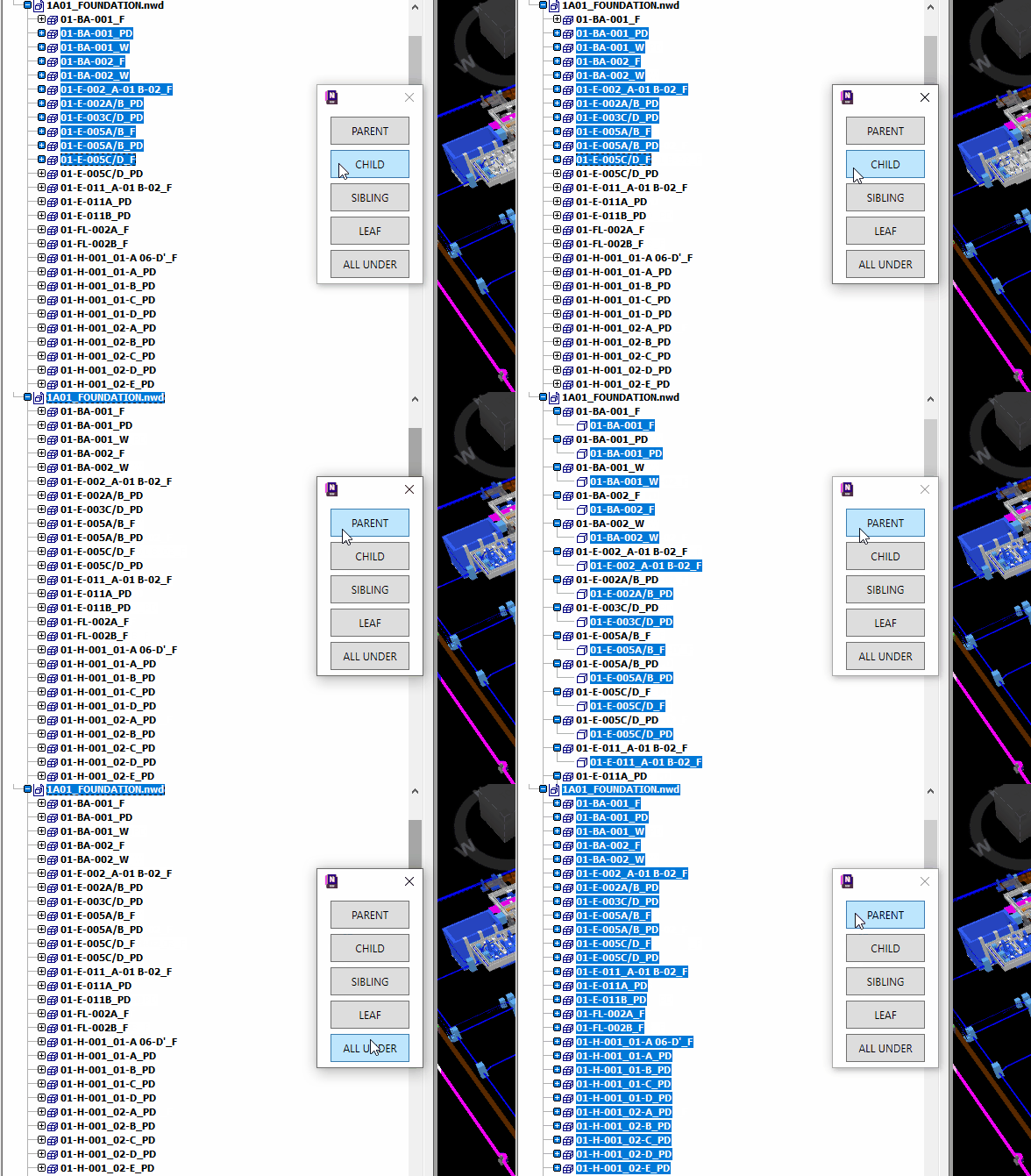

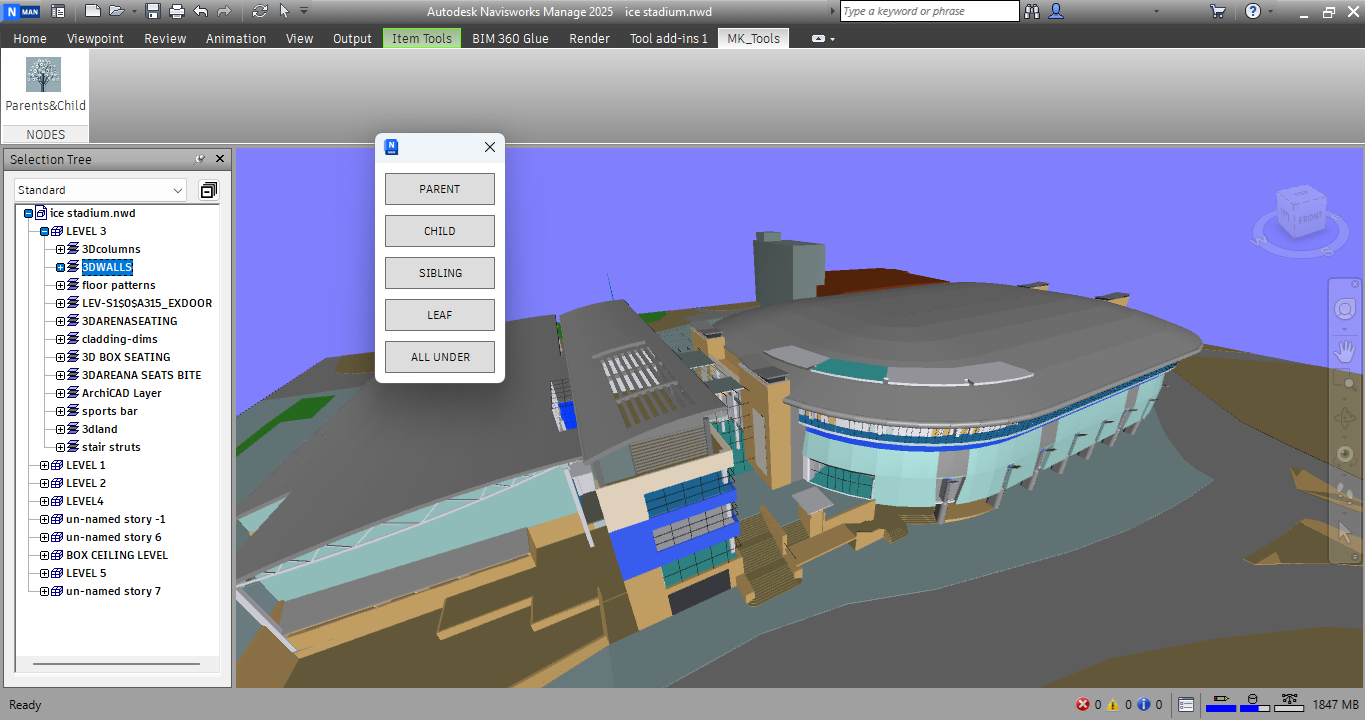

Its Navisworks plugins which extend your expirience with Selection Tree Navigation.
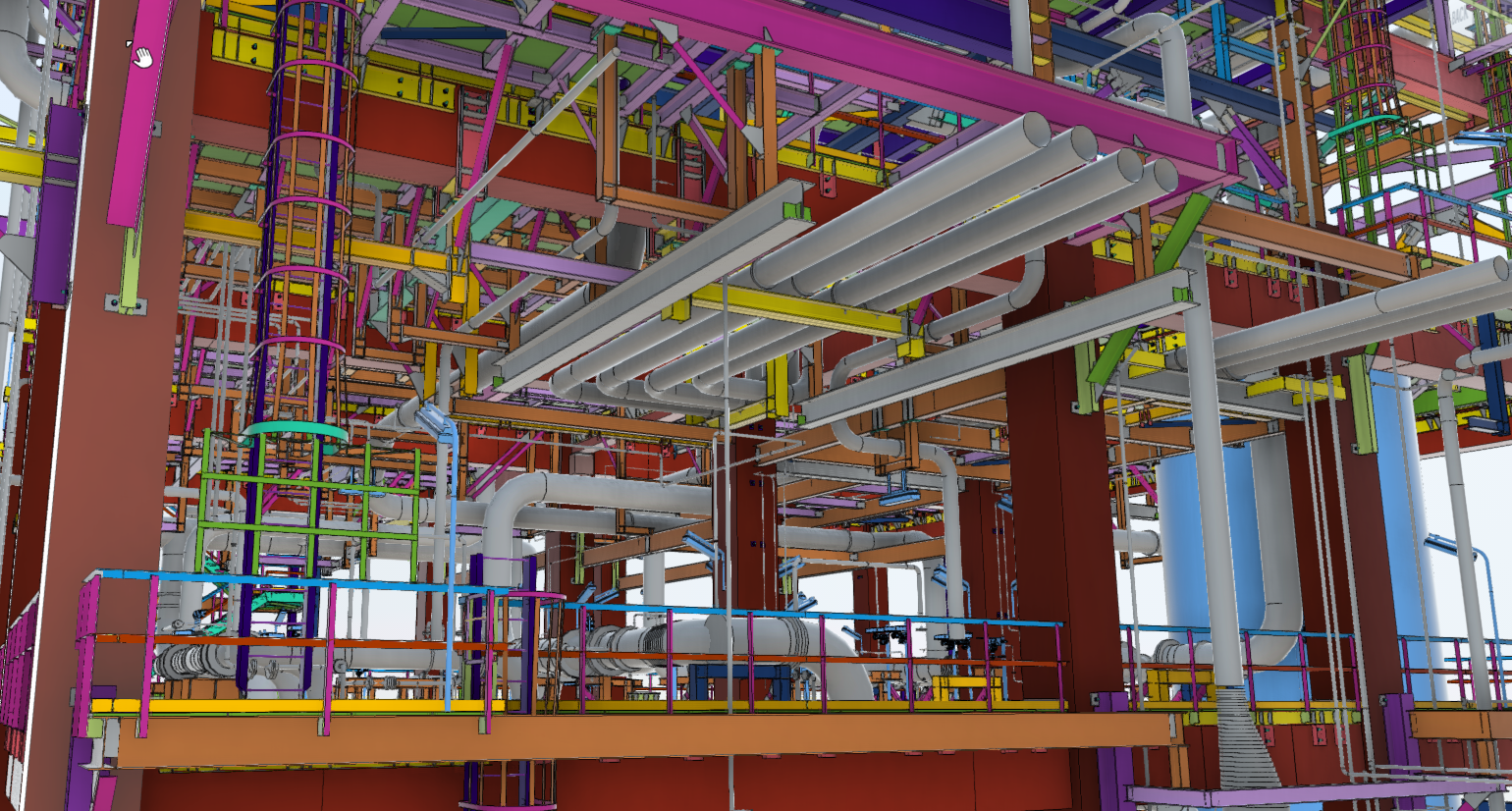
The short answer: the Forge Viewer (internally called LMV, Large Model Viewer) barely uses Three.js as a rendering engine. It uses a forked r71 for the math library, the WebGL state wrapper and the material/shader plumbing, and replaced everything above that with its own machinery built for one job. The Three.js version is obsolete because nothing they depend on lives in the parts that changed since 2015, and upgrading would mean re-porting a decade of divergence for no gain.
What actually makes the difference:
Object3D with a matrix, a parent, children, and a per-frame updateMatrixWorld walk. LMV stores a model as a flat FragmentList: packed typed arrays for transforms, bounds, material ids and geometry ids. A million fragments is a few contiguous buffers, not a million JS objects. That is cache-friendly, garbage-free and trivially iterable.BatchedMesh and InstancedMesh now, but you have to build that yourself, and most loaders produce one mesh per element.So, the frame rate is not a property of the Three.js version. It comes from the file format, the flat data model, the BVH and the progressive renderer, which is why Autodesk had no incentive to chase upstream.
One correction to the premise: other engines do reach this class. xeokit uses data-texture geometry with the same flat philosophy, That Open Engine builds fragment models on modern Three.js, and Speckle takes a similar path. What they share with LMV is that they abandoned the per-object scene graph. A stock Three.js app with one mesh per element cannot get there, and that is the comparison most people are making.